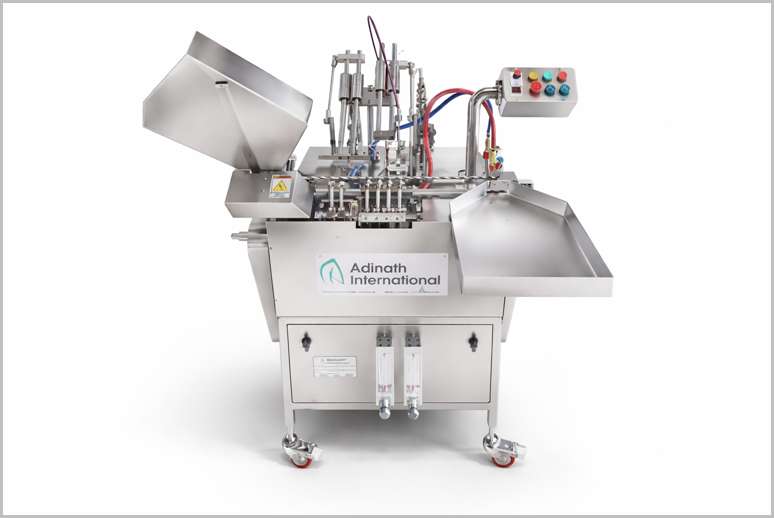
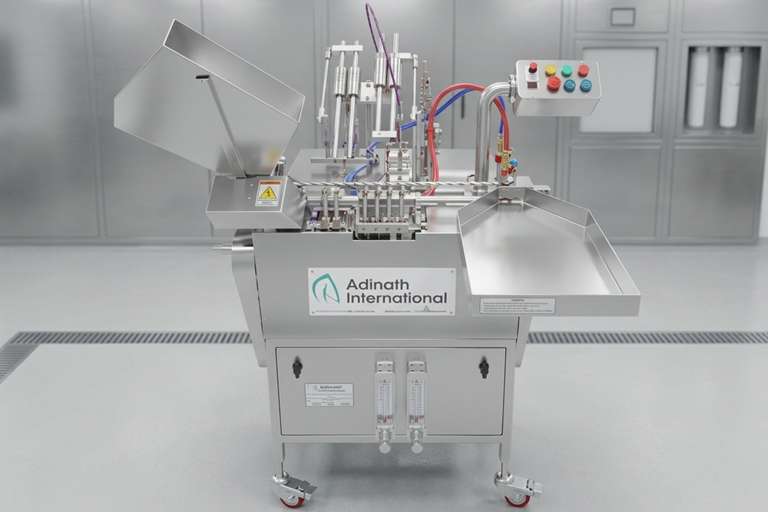
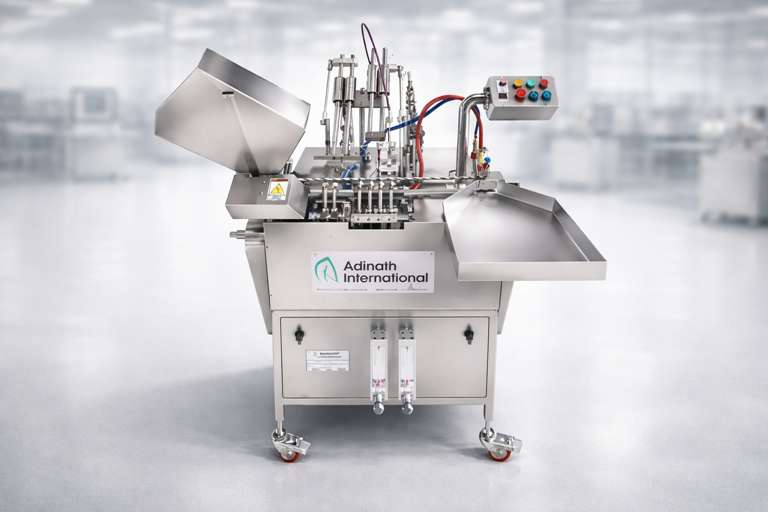
Ampoule filling machine are specialized, high-precision equipment widely used in the pharmaceutical, biotech, cosmetic, and chemical industries for filling and sealing glass ampoules with liquids, powders, and other sensitive formulations. These machines ensure accurate, sterile, and contamination-free packaging of medicines, vaccines, injectables, and high-value products.
Ampoules are small, hermetically sealed glass containers designed to protect delicate substances from air, moisture, pollutants, and microbial contamination, thereby maintaining product stability and extending shelf life. Modern automatic ampoule filling and sealing machines are engineered to deliver consistent fill volumes, superior accuracy, and high-speed operation while meeting stringent cGMP and regulatory standards.
This comprehensive guide covers everything about ampoule filling machines — including their working principle, key components, advanced features, technical specifications, and diverse industrial applications.
The ampoule filling and sealing machine is engineered to handle a wide variety of ampoule sizes with different neck dimensions, glass thicknesses, and ovality. It uses a unique slant travel principle during the filling and sealing process, ensuring smooth, precise, and gentle movement of ampoules to minimize breakage and maximize filling accuracy.
Built for durability and hygiene, the entire unit is constructed on a sturdy stainless steel square pipe frame and fully enclosed with high-quality stainless steel panels featuring an elegant matte finish. The machine’s bottom side is designed with large, easily accessible cleaning ports that allow thorough cleaning and maintenance, making it fully compliant with cGMP standards and ideal for sterile pharmaceutical production environments.
Empty washed & sterilized ampoules loaded onto infeed hopper of the machine. From where it has been received to receiving rack through starwheel/cassette. The moving rack which moves horizontally collect one/two/four/eight ampoules from the receiving rack and transfer the ampoule to the machine in left to right in an inclined position. During ampoule movement Pre-gassing, Filling, Post Gassing, Pre-heating & Sealing Station perform filling and sealing operations. At the end duly filled and sealed ampoules get collected automatically onto collection tray of the machine.
The operation of an ampoule filling machine follows a systematic, automated process to ensure sterility, precision, and efficiency:
The machine operates on the principle of slant traveling, where ampoules move at an inclined angle during filling and sealing to accommodate variations in neck size, thickness, and shape, ensuring consistent results.
| Model | AFS-1 | AFS-2 | AFS-4 | AFS-8 |
| No. of Head | Single | Two | Four | Eight |
| Syringes | One | Double | Four | Eight |
| Ampoule Sizes | 1 ml to 30 ml | 1 ml to 30 ml | 1 ml to 20 ml | 1 ml to 20 ml |
| Filling Speed | Up to 25 ampoules/minute | Up to 50 ampoules/minute | Up to 100 ampoules/minute | Up to 200 ampoules/minute |
| Filling Precison | ± 1% | ± 1% | ± 1% | ± 1% |
| Filling Pump | Piston Pump | Piston Pump | Piston Pump | Piston Pump |
| Burner Gas | LPG & Oxygen (O₂) | LPG & Oxygen (O₂) | LPG & Oxygen (O₂) | LPG & Oxygen (O₂) |
| Nitrogen Arranegment | Before & After Filling | Before & After Filling | Before & After Filling | Before & After Filling |
| Number of Fill Nozzles | One | Two | Four | Eight |
| Number of Nitrogen Nozzles | Two | Four | Eight | Sixteen |
| Number of Sealing Burners | Two | Four | Eight | Sixteen |
| Power Required | 0.5 H.P. | 1 H.P. | 1 H.P. | 2 H.P. |
| Power Voltage | 230 Volts, Single Phase, 50 Hertz, 4 Wire System | 230 Volts, Single Phase, 50 Hertz, 4 Wire System | 230 Volts, Single Phase, 50 Hertz, 4 Wire System | 230 Volts, Single Phase, 50 Hertz, 4 Wire System |
| Contact Parts | Made from Stainless Steel 316L | Made from Stainless Steel 316L | Made from Stainless Steel 316L | Made from Stainless Steel 316L |
| Overall Dimension | 915mm (L) x 610mm (W) x 965mm (H) approx. | 915mm (L) x 760mm (W) x 965mm (H) approx. | 1200mm (L) x 1070mm (W) x 965mm (H) approx. | 2200mm (L) x 1400mm (W) x 1100mm (H) approx. |
* Power voltage can be adjusted as per customer’s domestic power voltage requirements.
* Rights of technical improvements & modification reserved.
* Illustrations & dimensions are shown for information purpose only.
The Ampoule Filling Machine is a high-precision automatic system designed to fill sterile liquid formulations into glass ampoules and hermetically seal them using flame sealing. It is widely used in the pharmaceutical, biotech, and veterinary industries for producing injectable products. The machine incorporates nitrogen flushing (pre-gassing and post-gassing) to minimize oxidation and ensure product stability. Available in single to eight-head configurations (AFS-1 to AFS-8), it suits both medium and high-volume sterile production while maintaining Class 100 environmental compatibility.
Production capacity depends on the model:
It handles glass ampoules from 1 ml to 30 ml (model dependent) with a filling range of 0.5 ml to 30 ml in a single dose. The machine delivers excellent filling accuracy of ±1% (achievable up to ±0.5% under optimized conditions) and supports quick changeover with minimal change parts.
Sterilized ampoules are loaded into the infeed hopper and transferred via starwheel. The automated process includes:
The entire operation occurs in a slant position under controlled conditions to maintain sterility and prevent contamination.
The machine requires:
All product contact parts are made from AISI 316L Stainless Steel, while non-contact parts use SS 304, ensuring full cGMP compliance and easy sterilization. Optional integration with Laminar Air Flow (LAF), RABS, or isolators is available for enhanced sterility.
Key features include:
The machine is fully cGMP compliant and designed for minimum human intervention in sterile environments, making it reliable for oxygen-sensitive and high-value injectable products.
United States | Canada | Mexico | Brazil | Argentina | Chile | Colombia | Peru | Germany | United Kingdom | France | Italy | Spain | Netherlands | Belgium | Switzerland | Sweden | Austria | Denmark | Norway | Poland | Finland | Czech Republic | Hungary | Portugal | Ireland | Greece | Slovakia | Romania | Bulgaria | China | Japan | India | South Korea | Indonesia | Vietnam | Thailand | Malaysia | Philippines | Singapore | Bangladesh | Pakistan | Saudi Arabia | United Arab Emirates | Israel | Turkey | Iran | Qatar | Kuwait | South Africa | Nigeria | Egypt | Algeria | Morocco | Kenya | Ghana | Tunisia | Australia | New Zealand | Russia | Ukraine | Belarus | Kazakhstan | Taiwan | Hong Kong | South Sudan | Uzbekistan | Oman | Jordan | Bahrain | Sri Lanka | Myanmar | Lebanon | Mongolia | Ethiopia | Libya | Angola | Zambia | Zimbabwe | Mozambique | Ivory Coast | Senegal | Uganda | Tanzania | Botswana | Ecuador | Venezuela | Bolivia | Paraguay | Uruguay | Trinidad and Tobago | Panama | Guatemala | Costa Rica | Honduras | El Salvador | Nicaragua | Dominican Republic | Haiti | Cuba
Connect with our engineering team to discuss your specific production requirements. We provide customized, cGMP-compliant machinery solutions designed to optimize your manufacturing facility and maximize output.
Algeria | Angola | Argentina | Australia | Austria | Bahrain | Bangladesh | Belarus | Belgium | Bolivia | Botswana | Brazil | Bulgaria | Canada | Chile | China | Colombia | Costa Rica | Cuba | Czech Republic | Denmark | Dominican Republic | Ecuador | Egypt | El Salvador | Ethiopia | Finland | France | Germany | Ghana | Greece | Guatemala | Haiti | Honduras | Hong Kong | Hungary | India | Indonesia | Iran | Ireland | Israel | Italy | Ivory Coast | Japan | Jordan | Kazakhstan | Kenya | Kuwait | Lebanon | Libya | Malaysia | Mexico | Mongolia | Morocco | Mozambique | Myanmar | Netherlands | New Zealand | Nicaragua | Nigeria | Norway | Oman | Pakistan | Panama | Paraguay | Peru | Philippines | Poland | Portugal | Qatar | Romania | Russia | Saudi Arabia | Senegal | Slovakia | Singapore | South Africa | South Korea | South Sudan | Spain | Sri Lanka | Sweden | Switzerland | Taiwan | Tanzania | Thailand | Trinidad and Tobago | Tunisia | Turkey | Uganda | Ukraine | United Arab Emirates | United Kingdom | United States | Uruguay | Uzbekistan | Venezuela | Vietnam | Zambia | Zimbabwe
Connect with our engineering team to discuss your specific production requirements. We provide customized, cGMP-compliant machinery solutions designed to optimize your manufacturing facility and maximize output.
©Adinath International | Theme Developed By Pharma Machinery Manufacturer I Website updated on: 09 October 2026
WhatsApp us
