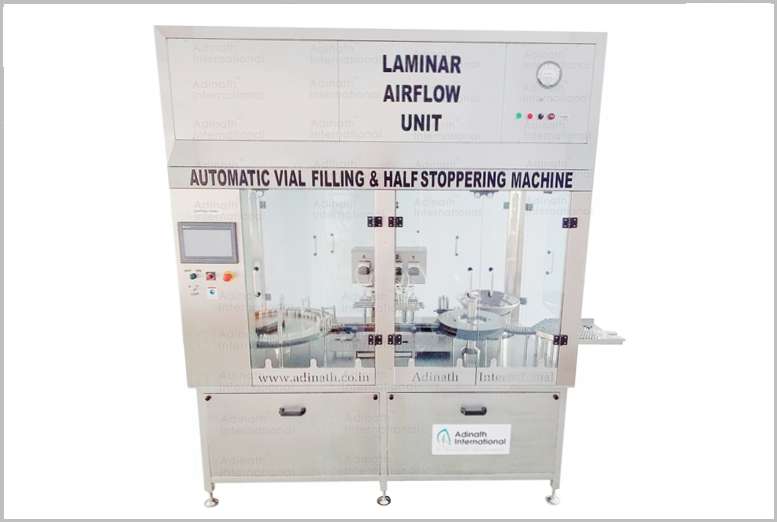
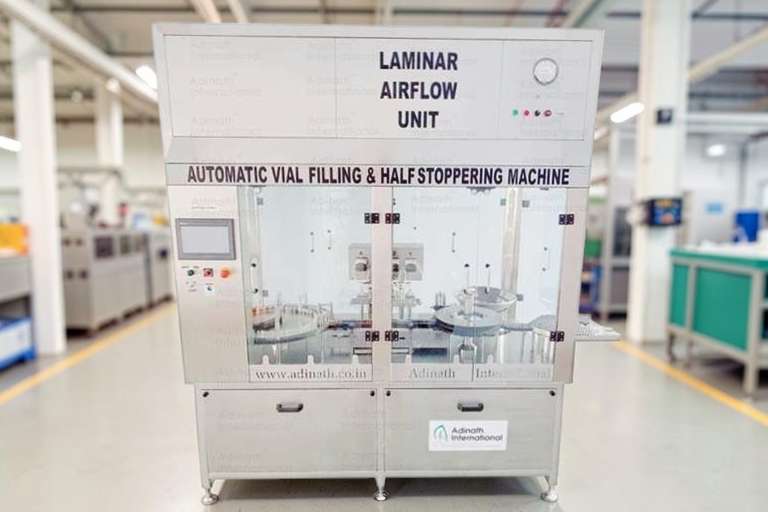
In the precision-driven world of pharmaceutical manufacturing, the integrity of sterile products is paramount. Among the essential technologies ensuring this standard is the Automatic Vial Liquid Filling Machine—often referred to as an Injection Vial Filling Machine. These systems represent a critical intersection of high-speed automation, safety, and strict regulatory compliance. At its core, an automatic vial liquid filling machine is a sophisticated, compact system designed to handle the precise dosing and sealing of liquid medications into glass or plastic vials. These machines are engineered to operate within sterile environments, such as Cleanrooms, where the highest levels of hygiene and contamination control are mandatory. While basic models exist, the industry standard has shifted toward Monobloc technology. A monobloc machine integrates two critical processes—filling and stoppering (or bunging)—onto a single, streamlined platform. By combining these functions, manufacturers can significantly reduce the footprint of their production line, minimize the transfer of vials between separate machines, and substantially lower the risk of particulate contamination or human error.
In the modern pharmaceutical and biotech landscape, precision and efficiency are not merely operational goals—they are regulatory necessities. Achieving consistent output while maintaining strict quality control requires advanced machinery designed to meet the rigorous demands of high-speed filling environments. Our suite of automatic vial filling solutions is engineered to provide exactly that, offering unparalleled accuracy, throughput, and reliability for critical filling applications. At the core of our filling technology lies a commitment to dosing accuracy. We offer a diverse range of filling pump alternatives, each engineered to maintain a filling precision of ±1%. This level of accuracy is essential for minimizing costly product waste and ensuring that every vial adheres to stringent dosage specifications. Whether your formulation is aqueous, viscous, or sensitive, our pumps provide the stable, repeatable performance necessary for pharmaceutical-grade production.
In the highly regulated pharmaceutical and biotechnology industries, the integrity of the production line is non-negotiable. Manufacturers must adhere to Current Good Manufacturing Practices (cGMP) to ensure that every product meets stringent quality, safety, and purity standards. A critical component of maintaining this compliance is the selection of processing machinery—specifically, equipment engineered with high-grade materials and advanced operational features. When evaluating vial processing equipment, the focus should remain on Expertise, Authoritativeness, and Trustworthiness (E-E-A-T). By investing in machinery constructed from medical-grade stainless steel and designed for high-efficiency synchronization, pharmaceutical companies demonstrate a commitment to both operational excellence and patient safety.
The incoming dry vials (sterilized and siliconized) are fed through the unscrambler and suitably guided on the moving Delrin slat conveyor belt at the required speed of the correct placement below filling unit.
The filling unit consists of Filling Head, Syringes & Nozzles; Syringes & Nozzles are made of AISI SS 316L materials. A Star Wheel is provided which holds the vial during filling operation. A sensor is provided for ”No Vial-No Filling” operation. Syringes are mounted on eccentric block and driving through bottom main gear box. Volume can be increase & decrease by increasing or decreasing stroke length of piston as per filling size. Syringes is having non return valve for sucking and delivering situation to avoid volume variation. Liquid reaches to filling nozzles through silicon transparent pipe. Nozzles having up & down movement with help of cam mechanism, and it come down when vial hold by starwheel for filling operation and starts filling when it starts to move up and after completion of filling operation, starwheel delivers two vials together on conveyor for rubber stoppering operation.
Stoppering unit consist of Star wheel, Vibrator unit and Bowl. The sterilized and siliconized rubber stoppers stored in the vibrator bowl moves vertically to the rubber stopper chute. The vial is hold firmly by starwheel, which will be in continuous rotary motion and vial which is coming from filling unit get in to starwheel and move in rotary direction along with starwheel, during movement it picks up the rubber stopper from the exit end of the chute and rubber stopper pressed by fix single pressing roller, which is spring loaded. Then vial further move on conveyor and collected on out feed starwheel for next sealing operation.
Model | ALVF-40 | ALVF-80 | ALVF-120 | ALVF – 250 |
Filling Heads | Two | Four | Eight | Twelve |
Production Rate | Up to 40 Vials/Minute | Up to 80 Vials/Minute | Up to 150 Vials/Minute | Up to 250 Vials/Minute |
Input Specification | ||||
Vial Diameter | 15mm to 70mm | 15mm to 70mm | 15mm to 70mm | 15mm to 70mm |
Vial Height | 25mm to 140mm | 25mm to 140mm | 25mm to 140mm | 25mm to 140mm |
Filling Precision | ±1% | ±1% | ±1% | ±1% |
Power Required | 1 H.P. | 1.5 H.P. | 2 H.P. | 2 H.P. |
Electrical Characteristics | 440 Volts, 3 Phase, 50 Hertz | 440 Volts, 3 Phase, 50 Hertz | 440 Volts, 3 Phase, 50 Hertz | 440 Volts, 3 Phase, 50 Hertz |
Overall Dimension | 2050mm (L) x 850mm (W) x 1700mm (H) | 2200mm (L) x 850mm (W) x 1700mm (H) | 3000mm (L) x 945mm (W) x 1700mm (H) | 3500mm (L) x 945mm (W) x 1700mm (H) |
* Power voltage can be adjusted as per customer’s domestic power voltage requirements.
* Rights of technical improvements & modification reserved.
* Illustrations & dimensions are shown for information purpose only.
Vial liquid filling machines are modular and often integrated into complete production lines. Common components include:
An Automatic Vial Liquid Filling Machine is a fully automated pharmaceutical equipment designed to precisely fill sterile liquids into glass vials. It integrates filling, rubber stoppering, and often sealing in a single continuous operation under aseptic conditions. These machines are ideal for producing injectable drugs, vaccines, antibiotics, and other parenteral liquid formulations while ensuring high accuracy, speed, and compliance with cGMP, FDA, and WHO standards.
Key advantages include:
Automation helps pharmaceutical manufacturers scale production efficiently while meeting stringent regulatory requirements.
Capacity varies by model and number of filling heads. Most machines offer:
Output depends on vial size (typically 1ml to 50ml), liquid viscosity, and line configuration. Our models can be customized to match your required hourly output — feel free to share your batch size for the best recommendation.
These machines use advanced dosing technologies such as peristaltic pumps, servo-driven piston pumps, or ceramic pumps for precise volume control. Features like diving nozzles (for foam-free filling), no-bottle-no-fill system, in-process weight checking, and automatic reject ensure accuracy within ±1% or better. The entire process occurs in ISO Class 5 / Grade A environments with RABS or isolator compatibility, using SS316L contact parts that are easy to clean and sterilize, maintaining product sterility and integrity.
Important factors include:
Our team can help you select or customize the right model based on your specific product and production needs.
United States | Canada | Mexico | Brazil | Argentina | Chile | Colombia | Peru | Germany | United Kingdom | France | Italy | Spain | Netherlands | Belgium | Switzerland | Sweden | Austria | Denmark | Norway | Poland | Finland | Czech Republic | Hungary | Portugal | Ireland | Greece | Slovakia | Romania | Bulgaria | China | Japan | India | South Korea | Indonesia | Vietnam | Thailand | Malaysia | Philippines | Singapore | Bangladesh | Pakistan | Saudi Arabia | United Arab Emirates | Israel | Turkey | Iran | Qatar | Kuwait | South Africa | Nigeria | Egypt | Algeria | Morocco | Kenya | Ghana | Tunisia | Australia | New Zealand | Russia | Ukraine | Belarus | Kazakhstan | Taiwan | Hong Kong | South Sudan | Uzbekistan | Oman | Jordan | Bahrain | Sri Lanka | Myanmar | Lebanon | Mongolia | Ethiopia | Libya | Angola | Zambia | Zimbabwe | Mozambique | Ivory Coast | Senegal | Uganda | Tanzania | Botswana | Ecuador | Venezuela | Bolivia | Paraguay | Uruguay | Trinidad and Tobago | Panama | Guatemala | Costa Rica | Honduras | El Salvador | Nicaragua | Dominican Republic | Haiti | Cuba
Connect with our engineering team to discuss your specific production requirements. We provide customized, cGMP-compliant machinery solutions designed to optimize your manufacturing facility and maximize output.
Algeria | Angola | Argentina | Australia | Austria | Bahrain | Bangladesh | Belarus | Belgium | Bolivia | Botswana | Brazil | Bulgaria | Canada | Chile | China | Colombia | Costa Rica | Cuba | Czech Republic | Denmark | Dominican Republic | Ecuador | Egypt | El Salvador | Ethiopia | Finland | France | Germany | Ghana | Greece | Guatemala | Haiti | Honduras | Hong Kong | Hungary | India | Indonesia | Iran | Ireland | Israel | Italy | Ivory Coast | Japan | Jordan | Kazakhstan | Kenya | Kuwait | Lebanon | Libya | Malaysia | Mexico | Mongolia | Morocco | Mozambique | Myanmar | Netherlands | New Zealand | Nicaragua | Nigeria | Norway | Oman | Pakistan | Panama | Paraguay | Peru | Philippines | Poland | Portugal | Qatar | Romania | Russia | Saudi Arabia | Senegal | Slovakia | Singapore | South Africa | South Korea | South Sudan | Spain | Sri Lanka | Sweden | Switzerland | Taiwan | Tanzania | Thailand | Trinidad and Tobago | Tunisia | Turkey | Uganda | Ukraine | United Arab Emirates | United Kingdom | United States | Uruguay | Uzbekistan | Venezuela | Vietnam | Zambia | Zimbabwe
Connect with our engineering team to discuss your specific production requirements. We provide customized, cGMP-compliant machinery solutions designed to optimize your manufacturing facility and maximize output.
©Adinath International | Theme Developed By Pharma Machinery Manufacturer I Website updated on: 02 October 2026
WhatsApp us
